Why Brand Matters More in the Age of AI
As AI becomes the front door to discovery, the brands people remember will have the greatest advantage.
By Josh Lewis | July 18, 2026
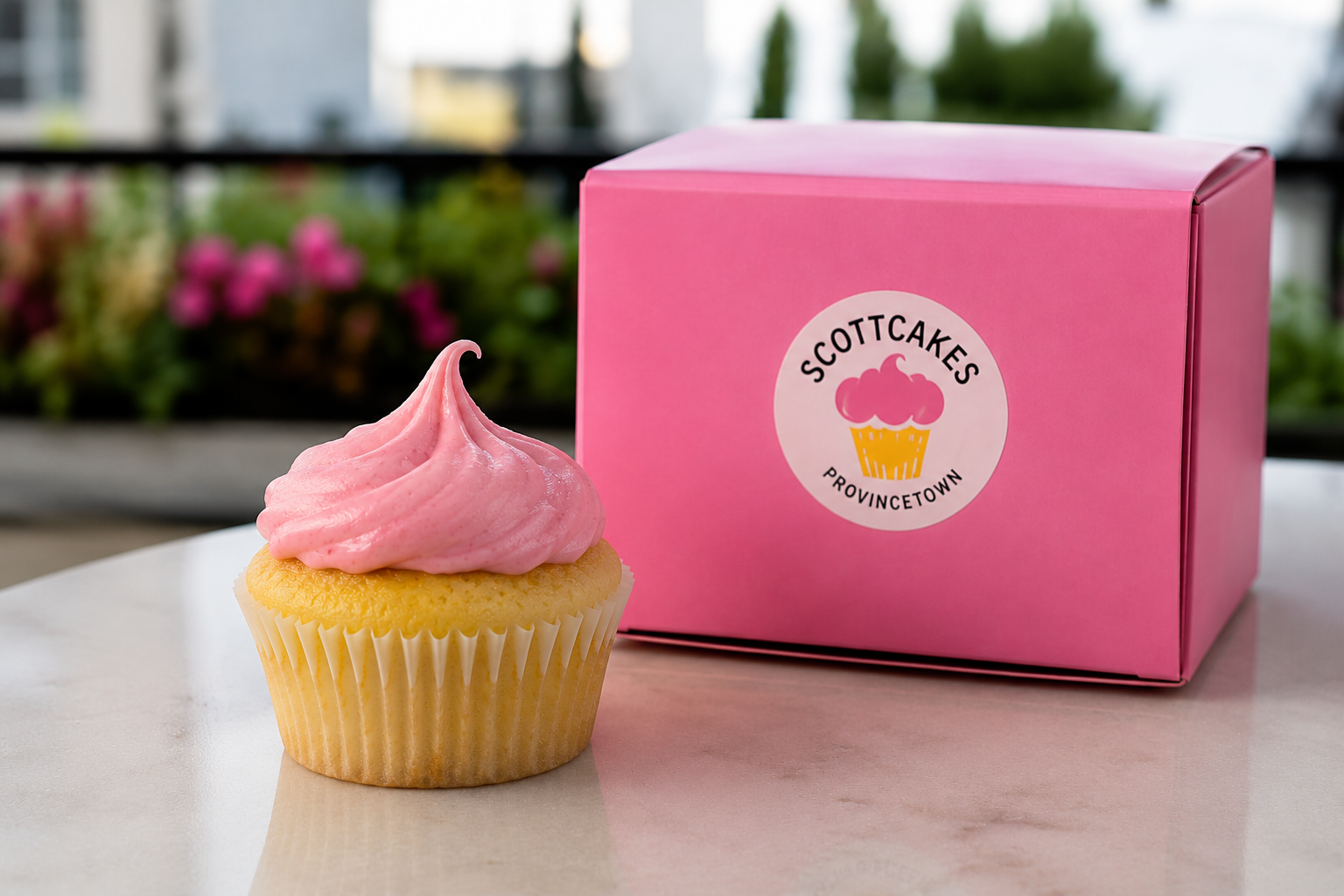
The ScottCakes box, Provincetown
It Started With a Pink Box
A few months ago I asked AI to create a brand strategy. It gave me a competent answer in seconds. It had positioning. Messaging. Target audiences. Everything looked right. And yet, it felt like it could have belonged to almost any company.
That's when it hit me. AI isn't making branding less important. It's exposing which brands never had one to begin with.
Oddly enough, the lesson became crystal clear because of a cupcake.
Any time friends visit me in Provincetown, there's one stop I never skip: ScottCakes.
Not because I'm craving dessert. Because I'm craving that dessert.
I want them to experience the buttery-soft cake crowned with insanely good pink frosting, tucked inside a simple pink box. Long before I take my first bite, I already know exactly what I'm about to feel.
It reminds me of another little box.
Tiffany & Co. built an entire brand around a particular shade of blue. Before anyone sees the jewelry, they recognize the box. It creates anticipation. It tells a story. It makes a promise.
ScottCakes does something remarkably similar. No one mistakes that pink box for anyone else's. It's become part of the experience itself. Any time I'm walking through town and spot someone carrying one, I think, those lucky devils.
That's what great brands do. They create the memory before the product is ever experienced.
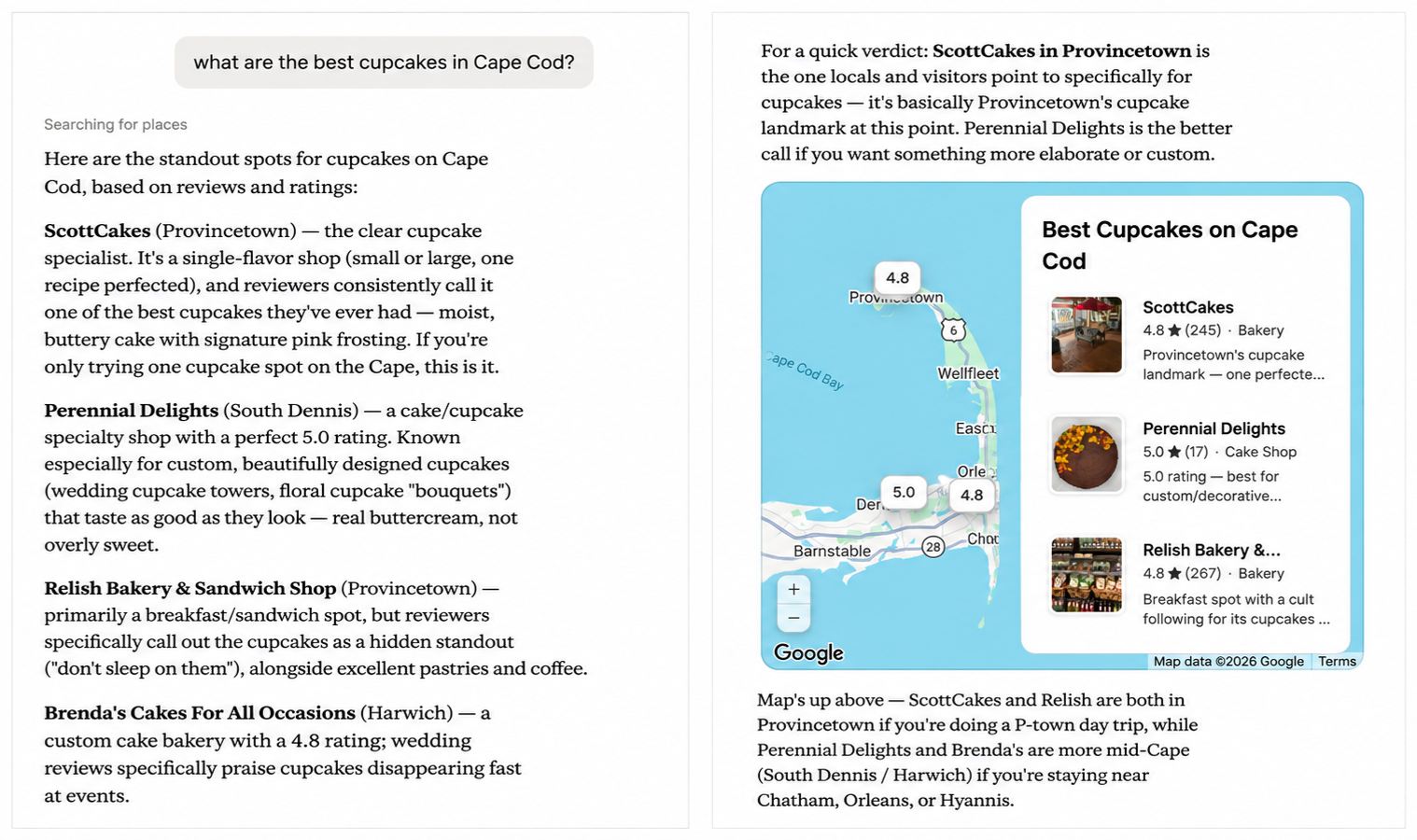
A few days later, I found myself asking AI a simple question: "What are the best cupcakes in Cape Cod?"
The answer appeared in seconds. No scrolling. No comparing five open tabs. No skimming reviews to separate the real ones from the noise. Just a confident recommendation, and ScottCakes was on it.
And it made me wonder: if AI becomes the place where people discover brands, what happens to brands like ScottCakes? What happens to any brand that spent years quietly earning a reputation, one pink box at a time?
Discovery Has Changed Forever
For years, Google taught us to think about visibility a certain way.
Rank first. Earn clicks. Optimize keywords. Build backlinks.
But AI doesn't hand someone ten blue links to sift through. It gives them an answer. That single shift changes what it actually means to be discovered.
In the old model, ranking #1 was itself a trust signal, Google's algorithm was vouching for you, and people treated position as a proxy for quality. The click was already halfway to a decision.
AI breaks that link. When an assistant surfaces three or four options, it's already done the narrowing work that used to take a person ten tabs and twenty minutes. But a mention in that list doesn't carry the weight a #1 ranking once did. It's not an endorsement, it's inclusion. You've cleared a bar, not won a contest.
Which means the moment of actual choosing gets pushed later, and it lands on something AI can't replicate: a felt sense of this one's for me.
Visibility Isn't the Same as Preference
This is where most conversations about AI and marketing stop. People assume that if AI recommends your brand, you've won.
I don't think that's true.
Being mentioned is different from being chosen. People still make emotional decisions, they always have. AI may narrow the field, but emotion still determines what happens inside it.
Exposure has shrunk to almost nothing. In the old funnel, people encountered your brand repeatedly, an ad, a search result, a review, a retargeted ad again, and familiarity built trust over time, one touch at a time. AI compresses all of that into a single encounter. You don't get ten chances to become memorable anymore. You get one shot, inside one list, and whatever impression you make has to land immediately or it doesn't happen at all.
On top of that, the kind of differentiation that used to work doesn't anymore. Nobody's optimizing for keywords when a machine has already done the sorting, what's left to separate you within the shortlist is almost entirely human: tone, story, whether a brand sounds like it actually knows you rather than describes a category generically. Optimizing for the algorithm is worth less now. Being humanly memorable is worth more.
And trust itself comes from somewhere different now, too. AI recommendations lean heavily on aggregate sentiment, reviews, forum threads, the way people talk about you when they aren't trying to sell anything. That's much closer to word-of-mouth than to backlinks. Word-of-mouth has always been emotional. Nobody repeats a recommendation because a brand had strong keyword density. They repeat it because it made them feel something worth passing on.
The Brands AI Recommends Already Earned Trust
Imagine asking, "Where should I stay in Manhattan?"
AI doesn't invent an answer. It draws from thousands of signals, reviews, articles, conversations, lived experience shared publicly. The hotels that consistently surface aren't there because they mastered SEO alone. They're there because they built a reputation that people kept reinforcing, one honest account at a time.
AI reflects perception. It doesn't create it.
Here's the distinction that actually matters: a search engine ranked pages. An AI model ranks reputations. That's a much harder thing to fake, and a much slower thing to build, which means the brands that spent years earning trust the old-fashioned way just picked up a structural advantage over the brands that spent years gaming an algorithm instead.
The businesses that treated SEO as a shortcut around brand-building are about to discover there was no shortcut. The businesses that treated brand-building as the actual work are about to get paid for it twice.
Why Emotion Becomes Even More Valuable
I've never thought of emotional connection as something a great brand produces. I think it's the thing you build first, and the brand follows from it.
Long before someone walks into a hotel...
Long before they taste a bottle of wine...
Long before they open a beautifully designed package...
...they've already formed an expectation. That's branding. And AI doesn't replace it. If anything, it makes it more valuable.
Here's why: the old funnel gave brands many chances to be persuasive, an ad, a landing page, a comparison chart, a follow-up email. AI compresses that into a single moment. One mention, inside one list, read in a few seconds, with no second touchpoint to recover a weak first impression.
Which means the emotional impression a brand has already built, before the AI conversation even happens, is doing more of the work than ever. You don't get to charm someone inside the answer. You only get to be recognized by it.
The Future Belongs to Memorable Brands
As AI becomes the new front door to discovery, businesses will pour enormous energy into understanding algorithms. Some of that work matters. But I think the bigger opportunity sits somewhere else entirely.
The brands that thrive won't simply be the easiest to find. They'll be the easiest to remember.
Because technology changes. Human nature rarely does.
People still choose what they trust. They still share what moves them. They still return to experiences that made them feel something.
There's a quieter shift underneath all of this, too: word-of-mouth just became the highest-leverage marketing channel again, not because it's sentimental, but because it's literally what the models are trained on. Every review, every offhand recommendation, every "I always stay there" is now training data for the answer someone else gets next year. Reputation isn't just goodwill anymore. It's infrastructure.
AI may change how we discover brands. But it won't change why we love them, and brands will need strategists who can personify that emotional connection to the public, not just optimize their way into a list.
AI will make it easier to create.
Brand is what makes people care.
And caring has always been the hardest part.
ScottCakes Is #1
In case you were wondering: I asked, and AI ranked ScottCakes first among Cape Cod cupcakes. It actually surfaced two Provincetown businesses, the other was Relish, which also happens to make phenomenal pastries, with genuinely great gluten-free options.
Neither of them got there through keyword strategy. They got there because enough people, over enough years, meant it every time they said "you have to try this place."
That's the kind of brand equity no algorithm update will ever erase. AI can recommend a business. Only people can make it unforgettable.
Visit ScottCakes Here: https://scottcakes.com
Visit Relish Here: https://www.ptownrelish.com
About Josh Lewis:
Josh Lewis is a brand strategist and creative director based in Provincetown, Massachusetts and Chagrin Falls, Ohio helping consumer brands grow through branding, retail experiences, merchandising, and customer experience.